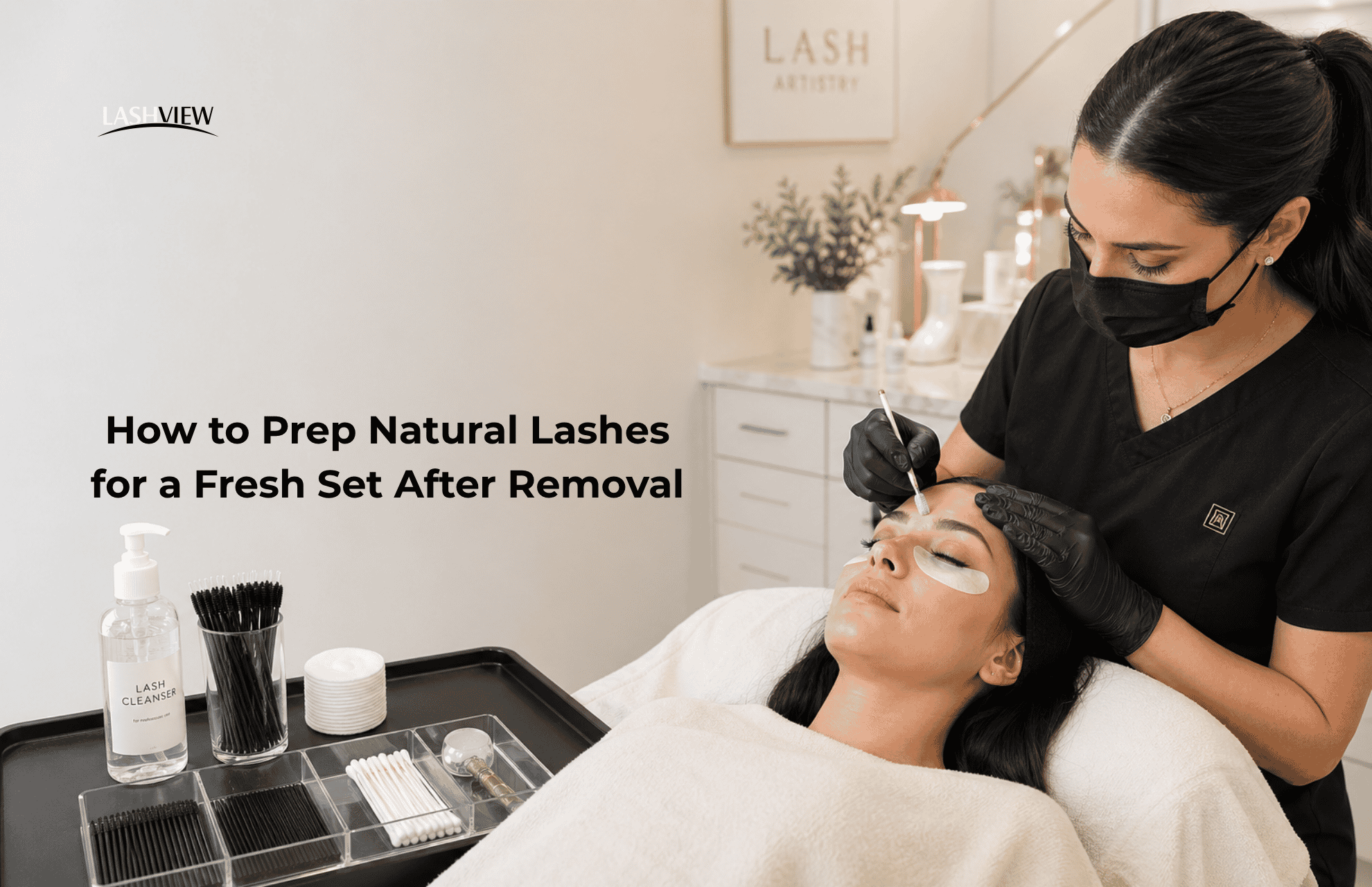
Not every lash appointment should default to a refill. Sometimes, a few targeted removals are enough to clean up grown-out extensions and continue the set. Other times, a full removal gives the client a cleaner reset and gives the lash artist more control over the next result. The real skill is knowing which service the lashes in front of you actually need. Professional lash education often treats this as a judgment call tied to the condition of the set, the client’s goal, and the amount of correction required.
Why Lash Removal Decisions Matter More Than Most Techs Think
A removal decision is not only about taking extensions off. It shapes the rest of the service. If a lash artist chooses the wrong path too early, the appointment can become harder to control, harder to clean up, and harder to transition into the next step. That is why the removal strategy should be treated as part of professional service planning, not just as a technical task. California’s safety guidance supports that more professional framing by centering licensed providers, clean tools, and safe working conditions in lash services.
In practice, the question is not “Can I keep some of this set?” The better question is, “Does keeping this set help or complicate the result I want next?” When lash techs think that way, removal stops being reactive and becomes part of a more intentional workflow. That kind of judgment is one of the clearest differences between a rushed lash service and a more professional one.
What Partial Removal Really Means in a Lash Appointment
Partial removal is not a half-finished service. It is a targeted correction. In many fill appointments, the goal is not to remove the entire set. The goal is to remove the lashes that have grown out too far, shifted direction, or no longer belong in the structure of the set, while preserving the areas that still work. London Lash’s professional guidance explicitly says that for clients coming for a lash fill, it can be quicker and easier to remove the grown-out lashes with a little drop of gel remover and then reapply.
That is why partial removal is best framed as a precision service. It fits small cleanup work, isolated direction issues, and limited correction during fills. The value of partial removal is not sped up by itself. The value is preserving enough of the set to keep the appointment efficient while still improving the structure where it matters.
What Full Removal Gives You That a Refill Sometimes Cannot
Full removal offers something a refill does not always provide: a true reset. When the old set is too grown out, too inconsistent, or no longer aligned with the client’s style goal, removing everything creates a cleaner starting point. That can make the next design easier to control and easier to explain to the client. Professional removal guides position full removal commonly as the better fit when the service goal is no longer a small correction but a more intentional restart.
A full removal also tends to simplify fresh-set planning. Instead of trying to build around too many leftover variables, the lash artist can work from a cleaner base and a more consistent design plan. That is especially useful when the set no longer has enough structure worth preserving. In those cases, full removal is not an overreaction. It is often the more efficient professional choice.
View Our Cream Remover for Full Reset Appointments
When Partial Removal Makes More Sense Than Full Removal
Partial removal usually makes more sense when the overall set still holds value. If the client mainly needs a few grown-out extensions removed, a bit of structural cleanup, or limited correction during a fill, targeted removal can preserve time and keep the service more focused. This is the exact scenario where professional tutorials often place gel remover: not as a default full-removal product, but as a precise tool for selective cleanup.
The key point is that partial removal works best when the set is still strong enough to build on. It is not a solution for every appointment. If the underlying structure is already too inconsistent, preserving more of it may only create more work later. That is why a partial removal decision still depends on honest assessment, not just on trying to save time.
When Full Removal Is the Better Service Choice
Full removal is the better choice when the set has passed the point where preservation is helping. If the lashes have grown out heavily, the direction has become uneven, the shape no longer matches the client’s goal, or the old work would make the next design harder to control, a full reset is often the cleaner path. London Lash’s “when to remove” content supports this logic by separating fill cleanup from situations where removal is the more useful service decision.
This is also where client communication matters. A full removal should be explained as a cleaner reset and a more controlled path forward, not as a pushy upsell. When framed correctly, it helps clients understand that the goal is a more consistent next result—not just taking everything off for the sake of it. That tone also fits broader U.S. professional safety guidance, which emphasizes licensed services and proper handling rather than casual or improvised treatment around the eye area.
Which Remover Fits Each Scenario?
If the appointment is moving toward a full reset, cream remover is easier to position as the better fit because control matters so much in that kind of service. Cream-based formulas are commonly framed in professional tutorials as more suited to slower, more deliberate full-removal workflows, while gel remover is more often placed in targeted infill cleanup. London Lash’s professional content makes this distinction clearly by linking gel remover to the removal of grown-out lashes during fills and by separately describing cream and gel processing times in full-removal education.
That does not mean cream remover is “always better.” It means the workflow should drive the product choice. If your service goal is a cleaner full reset, cream remover fits more naturally. If your service goal is isolated correction in a fill, gel remover may fit that limited task more naturally. The more professional answer is to match the remover to the service path, not to force one product into every appointment.
Compare Cream Remover vs Gel Remover
How to Explain Full vs Partial Removal to Clients
Clients do not always see the service decision the way a lash artist does. To them, a refill may sound easier, and a full removal may sound like starting over for no reason. That is why the explanation matters. The most useful approach is to describe the service path in terms of result and control: partial removal is targeted correction, while full removal is a cleaner reset.
This is also where overpromising should be avoided. Instead of saying a full removal will “guarantee” a better outcome, it is more professional to say it gives the next set a cleaner foundation and allows for more intentional design. That language stays within a service judgment frame and fits your brand tone much better. It also aligns more naturally with public safety guidance that emphasizes proper handling and professional standards rather than exaggerated claims.
How Removal Decisions Affect the Next Fresh Set
The path you choose today changes how easy the next service will be. A cleaner reset can make prep more straightforward and reduce the amount of leftover structure the next design has to work around. On the other hand, preserving too much of an inconsistent set can complicate prep, styling, and bonding later. This is one reason removal decisions are part of retention strategy, not separate from it. Professional prep content repeatedly links clean, dry, residue-free lashes with better bonding conditions for later services.
That is why full removal versus partial removal should never be treated as a simple “more” or “less” question. It is a question of what gives the next service a cleaner, more workable base. Once lash artists start thinking in those terms, removal decisions become easier to explain and easier to repeat consistently.
Read the Guide to Prepping Lashes for a Fresh Set
FAQ
Is partial removal better during fills?
It often is when the set still holds value overall, and the lash artist only needs to remove grown-out or misplaced lashes during a fill. London Lash specifically recommends targeted gel remover use for grown-out lashes in fill appointments.
When should lash techs choose full removal?
Full removal makes more sense when the set is too inconsistent, too grown out, or no longer worth preserving for the next design plan.
Can a refill fix every lash set?
No. Some sets benefit more from a clean reset than from trying to preserve too much of the old work.
Is cream remover better for full removals?
It is often easier to position cream remover as the better fit for full-removal workflows because professional education tends to link cream formulas with more controlled placement and full-removal processing.
What should you tell clients before recommending a full reset?
Frame it as a cleaner reset and a more controlled starting point for the next result, rather than as a dramatic change or an upsell.
The best lash artists do more than apply and remove extensions—they choose the right service path. Sometimes that means preserving what still works with partial removal. Other times, it means resetting the work completely so the next set starts cleaner, looks more intentional, and feels easier to manage from the beginning. Professional tutorials and public safety guidance both support that more measured approach: the right answer depends on the condition of the set, the service goal, and the amount of control the appointment needs.